Pages

Showing posts with label art. Show all posts

Thursday, May 28, 2020

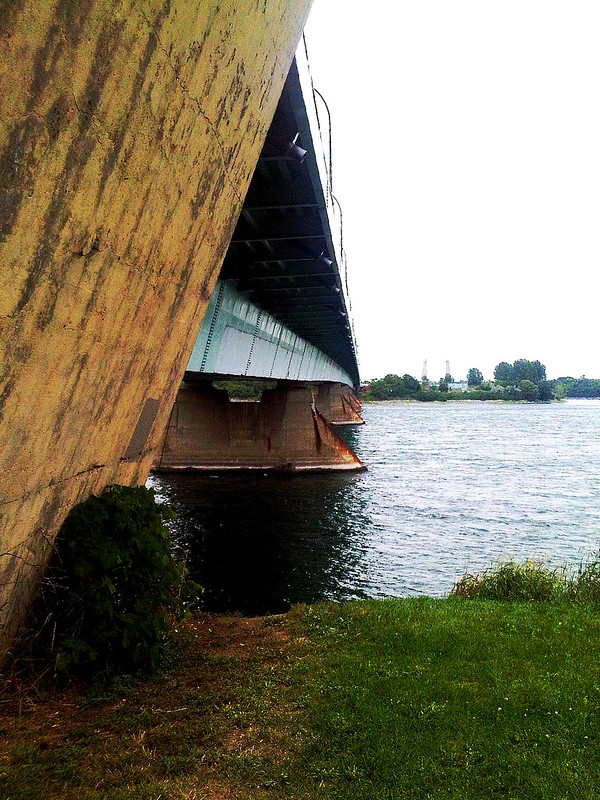
The Divide

from my flickr

Just read Iain McGilchrist's book on the divided brain. There is also a documentary video that summarizes the 1000 or so pages, which is difficult if not impossible. McGilchrist has a career spanning literature and neuro-psychiatry at the highest level. His thesis, formulated over 20 years is that our thinking and perception evolves from a confrontation between the verbal analytic side of our nature and the integrative perceptual side, and ideally should flow back and forth in a sort of collaboration to achieve good things.

His book has to err on the side of denotation to prevent attacks from the scientific culture which he criticises, and that is both its strength and weakness, it has to live in a left hemisphere world, defending the right, a bit like the opponents of our current demagogues, who need to use their tactics to get though a message. It is a losing game, but one that must be played for the long term.

I want to highlight the relationship to Jane Jacobs' ideas from her book on Systems of Survival where she makes a case for the healthy confrontation between cultural guardians and commercial facilitators. This work complements and consolidates her arguments across the history of the humanities and of the sciences.

Implicitly, the book links Dewey's (and Pirsig's) ideas on Quality and morals to the continental existentialists (finally!), but there is much more work to be done bridging the philosophies of the positivists with that of the continentals, especially in our English speaking cultures. There are glints of hope, for example Lakoff and Johnson's work, but too little uptake from what I can see.

Kahneman and Pinker are also present as critics in the background of McGilchrist's arguments, against thinking fast and favoring thinking slow, and arguing for the primacy of language over music. McGilchrist forcefully responds to Pinker's attack on his web site. I am also not sure how this relates to Chomsky's embedded linguistics, but we shall see. Chomsky can be quite defensive, as Tom Wolfe writes.

Existence precedes essence is so well presented, with forceful cultural, scientific and artistic evidence by someone raised in the positivist tradition. We (the West) need to budge away from Platonism. This key to our success, our domination of the environment, may no longer work now that we are on the downside of the arc of sustainability. This crisis may be a touchpoint, who knows.

I am listening to Joni Mitchell who understood that we were heading this way, back in the late sixties.


Sunday, July 27, 2014

Breakfast at Tiffany's and Kiss Kiss Bang Bang

It was 1961. Blake Edwards directs Audrey Hepburn who plays an American geisha based on a story by Truman Capote. For Hepburn, it is a defining role, for the other players, like George Peppard, Buddy Ebsen, and Martin Balsam, it would be one of their best roles before moving on to the new upcoming medium of TV.

Blake Edwards who had funny ideas about what is funny, had asked Mickey Rooney to pretend he was Japanese, created a typical surreal party scene, and later regretted and apologized for the former and repeated the latter with Peter Sellars playing an Indian gentleman in brown-face.

Detail from Dancer - copyright 2014 - A. Barake

Despite all the Hollywood crassness and foibles and the watering down of the very moving story, the movie is a classic, and is moving. Some scenes are exactly true to the book, and their power undiluted. The undercurrent of tragedy is always there, the sadness of men's lust for youth, the hurt of youth abused, and the exploitation that derives from these circumstances is played though the central character.

The pattern of a party girl that knows that sex is power yet that feels trapped by it and yearns for something more permanent than the puppet strings that the pull of Eros provides is classic. Marilyn's appeal comes from there. That Hepburn was able to transcend it while still providing the sadness is genius.

Kiss Kiss Bang Bang, although ostensibly playing with Chandler themes, does provide a nod to the same story (to be fair, so did Chandler in his own misogynistic way in "The Little Sister"). There is the sad back story of childhood abuse, and the party girl in Hollywood plot line, and the sympathetic "friend" who wants her but cannot "have" her.

The pattern of friendship that becomes love is a Hollywood staple, watered down in Doris Day - Rock Hudson movies, and used and abused even today. Kiss Kiss Bang Bang hints at it, but the boy and girl do not get together, the boy finally admits to not being good with girls. It plays all the cliches and then twists them into something that says "I know all about this bullshit".

Breakfast at Tiffany's could not do that. It was shot on a budget of $2.5 million and earned 15. Kiss Kiss Bang Bang was shot on a budget of $15M and made 16. Draw your own conclusions on what sells.


Thursday, June 19, 2014

How Downton Abbey is the M*A*S*H of our times

Robert Altman shoots high. He made indie movies through mainstream distribution mechanisms, his way, with no apparent compromises. Actors loved to work for him. He got the best and he got them to be their best.

His breakthrough M*A*S*H film was made more or less at the same time as other mainstream war films like Catch-22 and Patton, but his had a humanistic twist, not as black as Catch-22, not as jingoistic as Patton. The characters were iconic, and the setting eternal. So much so that the TV series that followed used the same set, ran for a record time and was much loved. Altman did not see much or any money from the series.

It is interesting to compare the movie to the series. It is a good example of how movies could go further, were more adult, in the real sense than TV. The sentimentality was absent, the self-censorship not there.

Fast forward to about ten years ago. Altman, in his mature years, make the perfect manor mystery: Gosford Park. The threads of social change in post Victorian England are captured. The futile snobbery, the emergence of movie making, the dark side of robber barons, and the unfairness of class, are all wrapped in the tropes of the genre, with a wink at the detective, hammed up by Stephen Fry, the upstairs downstairs, the shooting party, the sumptuous settings. The movie works, like all Altman movies, on so many levels that it almost becomes a documentary.

The script credit goes to Julian Fellowes, who afterwards, said that Altman took his script as a starting point, in the same way that Kubrick took Clarke's "2001 a Space Odyssey"  as a starting point (my interpretation, not Fellowes').

Fellowes got a hefty fee with which he bought one of the manors used for the set. He then famously went on to write the TV series Downton Abbey, with many of  the same characters and settings. It is a lavishly produced soap opera. Sentimental, full of short intertwined plot lines, but ultimately apologetic to and for the upper classes. Completely unreal, completely different than Gosford Park, hugely successful and profitable.

Downton Abbey is to Gosford Park what the M*A*S*H  television series was to the original movie. Altman's career was framed by two very similar show trajectories. 

Saturday, December 21, 2013

The Continuity of Consciousness


Were the Greeks onto something when they coined the roots of the word "consciousness" and "continuity"? To be conscious is to remember the last moment of perception and to link it to the next, to have your brain relate perceptions into some coherent short term stream, so that you can feel and act on it.

Consciousness is continuity of perception. As you fall asleep, that continuity gets fragmented and you tend to forget the next moment, you lose consciousness and continuity.

Consciousness depends on the existence of the short-term cache used to process incoming data from the senses. It has to be fast, and it has to integrate the information for the deeper layers, the one that drive action and long term memory. It has to draw upon memory as well. Short term memory is limited in size because it is big on processing power. Lots of neurons required.

Current research on cognition suggests that we have a bunch of neural bundles in the brain that do this work all in parallel, that these compete for bandwidth, and the resultant dynamic network signals are what we can call consciousness. The signals that have control of the bus at the time, and that pulse it to make us act and remember are the Self.

This model does not address the big question of the Me. What makes a writer want to take this flow of perceptions, call them ideas, record them on secondary external memory and publish them so as to possibly communicate and affect the behaviour of others. The Will to Power?

What links us to the world as Beings. This is what the better religions are struggling with, and Zen Buddhism comes close to understanding it when it concludes that the universe is Me, and that the relationships between beings is the Universe. Still, a loop. Maybe language is the issue. We have an object-oriented language, and that is a flawed model, as many programmers and programs are discovering. The world cannot be entirely described as a hierarchy of "objects" What is an object anyhow, except an integration by the senses, a model. Another loop.

Some drugs like alcohol, anaesthetics, and sleep hormones allow these neural bundles to slow down, to rest and possibly to re-organize, do to maintenance. Caffeine and other stimulants speed up the bus somehow.

We feel and act differently under these influences because our front end processing changes, the continuity of short term memory and of sensual processing changes, thus affecting our sense of self and our relation to our longer term memory and patterns of integrated behaviour.

Musicians and visual artists discover new patterns under the influence. Whether they create "better" work or play better is difficult to say, but I think that the intent is to explore different avenues, which can lead to better work when edited. Write drunk and edit sober said the late Kingsley Amis.


Thursday, July 11, 2013

Selfies

Add captioCopyright 2018 A. Barake


The usual trope about the necessary relationship between the individual's pursuit of art and its potential for universal appeal makes it a spectrum, or a see-saw, where some classic works seem to transcend the creator to the point of redefining them, think of Kafka for example, and others are callow self-centered curiosities,  vicarious navel-gazing porn, something we can escape into for a while, think of Leonard Cohen, or of Madonna.

Being a spectrum that ranges from the personal to the universal, and the laws of statistics being what they are (more on that later), most artists balance with one foot on each side of the fulcrum to make a go at it.

Since I am using a categorization argument, I must also talk of those who create entire new universals, new micro-cultures, new ways of seeing, by extending the culture. Movements are easier in groups, thus marketing attempts that wow the weak-minded critics, but once in a while, a huge, huge ego leave the packs behind, through mono-maniacal focus and dedication. This is a special  flavour of self-centredness. This is
what we label as genius.

The cost is to the normal. You cannot be outside the norm and live normally. Looking at examples, like Picasso, Frank Lloyd Wright, Hemingway, we see the huge personal toll on their close ones. Relationships have to come second to the work.

Since we learn by aping others, there will always be minor artists who embrace the self-centredness first and then hope for the universality.

What easier subject to study than the one we are in love with most. The self-portrait is a rite of passage, like the nude. Without a real muse, I can be my own. Even a muse can act as an amplifier to my ego.

There are so many writers, musicians, visual artists, who can do no better than tell us stories about themselves. The ones we hear above the din are the ones who tell us with style, those that rise above the averaging noise, that can be seen through the grass, but the intensity, quirkiness, and interest is no substitute for transcendence.

Define transcendence? It is a tear in the fabric of the ordinary. It can be a distillation of events that has not occurred to others - therefore something new, always a winning formula, but more commonly, it is a new
combination of the ordinary that falls outside the usual intersection of normal bell curves.

This brings me to the statistical discussion that I promised earlier. Someone wise said that statistics is the mathematics used to make sense of stories. What that means is that we can use statistics to understand how stories are related, and how likely they can related to patterns. And patterns are the stuff of
thought, of art. Patterns are things that occur because the environment is what it is, so a pattern is a tendency, and from there we can rise up through the layers of entropy towards culture, toward life and art.

Statistics came into its own in the early twentieth century, and became so useful that it is now essential in industrial production, in fact a Guinness employee - yes the dark beverage company - discovered a family of distribution curves that help us "know" the level of uncertainty of events or data from very scarce samples, from very short stories, because stories follow natural patterns.

Statistics is counter-intuitive because it is not about individuals, but about groups, about populations, and we are not naturally empathetic, we are competitive, we are locked inside one vision, inside the self and the self wants to think itself unique. Statistics is the tonic to free-will arguments.

Art has to be on the edges of the bell curves, yet it has to make the bell ring from there.


Friday, May 31, 2013

Lars Von Trier, green screens, and the edge of Reality


I want to talk about why I think all this "virtual movie making" is happening and why Lars and his buddies wanted to put an end to it and why all this may be misunderstood.

First why all the green screen effects, backgrounds, characters? Is it because  there may be the feeling that what can be captured on film as reality has become banal, overly accessible? Is it because we can travel much anywhere quite affordably, and so locale is losing its novelty appeal, it is no longer only the rich that can visit Petra or Goa, or the Forbidden City?

So maybe we make things up. Other planets, other systems, alternate reality, dystopia, and fantasy. There even seems to be a trend to recreate the destruction of skyscrapers that marked the start of this decade. Abuse breeds abuse, and we are repeating the behaviour of the Japanese post-nuclear monster movies, on a different scale, with transformer planes and spaceships crashing into futuristic cities. 

 Lars seems to object to this, and rightly so. There are interesting and real (in the non-CGI sense) experiences and associated beauty to be mined still. We are thrill seeking entertainment consumers but we don't have to be just that. So his solution is  to make movies about thing we usually do not see, the intimacies and extreme moments, sex of others. I am not sure this is any better. It may even be  the same, cheap thrills. 

Has the mining of multi-layered human experience ended, has the Nouvelle Vague covered all that territory? Soderberg and Nichols are still doing good stuff on the North American side of that vein are they not? Why not build a bit? Stories and scripts are risky, it is easier to assume that the middle of the bell curve wants the opening weekend escapism, but then I  think there is an opportunity to quell the angst of the consumer culture and the futile lust for the new and special with the quiet calming, dare I say Zen, reality that a focused lens can bring to life. It is a bit like writing about the everyday to make is stand out to make it special, a diary of life as it could be as it is.

Wednesday, November 7, 2012

Architecture is predicting the future


When an architect is asked to design something, part of the challenge is to anticipate the effect that this usually large built and immovable object will have on the many people that will see, use and possibly inhabit it.

Conceptual art approaches can help, for example making a building evoke an idea, or using an idea to start a design, but they are never enough. That my building is 1776 feet high may help get sponsorship, but in it will hardly be perceived.

Fame or notoriety help. Celebrity architects draw buzz and crowds. One can invest genius in a built object and the aura of the famous designer creates a culture around the space.

The inescapable challenge of architecture however is to be present in time and space in a significant way.

Here is an example of how things can go wrong:

In my little town, the well-meaning heritage preservation committee got involved in the review of a design for a pump house that would sit along the waterfront. The building would need to have the volume of a large two storey house.

The committee looked around "for context" and found a nearby older shed that had two stone gable ends and a very symmetrical sloped roof, a kind of 19th century shed. So they strongly suggested that the utility's architect (or most likely engineer), take the cue.

The intention was to reflect the heritage of the industrial waterfront area.

The result was a large, white stucco covered imitation of an old shed, like an over sized paper model of it, sitting there contrasting against the dark water and sky.

I don't think that was the intention. I also think that any architect would have easily anticipated this and informed the client of the danger. Unfortunately, the heritage preservation committee is wedded to form and mimesis (a pompous architect term meaning copycatting). Unfortunately, it is an easy notion to sell, a concept that seems to make sense, reflect shapes, and if you are lucky materials.

An aside:
I agree with many of my colleagues who say that if you are going to do some restoration work or add to an older building, choose one: re-use material or re-use form and proportion, but don't do both, at the risk of getting some half-assed mimesis.

Ok, so back to the story. This thing now sits on the waterfront, annoying, out of place, and a reminder of industrial sheds we lost, but bigger and worse.

So instead of learning a lesson, this heritage committee moves on, job well done, and is now addressing the problem of our train station. Again, mimesis is being suggested, but this time there is no proximate context, so they looked in the pattern books for old train stations with huge eaves, and came up with some hybrid Frank Lloyd Wrightish stone bunker, because they wanted the stone of course.

What is galling is that the railway people had proposed a very nice, airy design, with proper functional overhangs to protect people on the platform, but with nice glass, and curves and a good light feel to it, considering the barren context of the area, a jewel that may have lightened the oppression of the district.

I don't think it will be realized, because no-one thinks that architects can predict the future, especially when the heritage preservation committee is locked in the past.


Thursday, October 18, 2012

Half-baked vs open to possibilities? A manifesto.

studio series A. Barake 2008

I like the unfinished.

Whether it be studies, sketches, snippets of songs, or first drafts.

They seem alive, they allow for the future.

The future that I can choose to defer, giving me the hope of potential, of life going on.

Half-baked means that dinner is coming.

I also like the fully realized. It is post-coital, closure, comfort, time for closing the eyes and savoring.

So what is left not to like in this spectrum?

The mediocre, the completed in haste, the delivered for money not love, the faked, the cliche , the pandering to mass appeal, the blue smoke sentimentality of bad films by Spielberg and his ilk.

Playing the devil's advocate, I can see that the charges of laziness and lack of discipline can be laid. Other lesser judgements could be "wishy-washy", indecisive, uncommitted.

Yes, all valid categories for this approach, but the Venn diagram is flawed. These are not super sets of the incomplete. The incomplete is the super set of the attributes I list, and of many others. The incomplete action is the existential act, the rest is just noise and judgement. Being incomplete may not lead to riches, mass appeal, or to classic status, but it can reflect life and happiness. Certainly for me.


Thursday, October 11, 2012

Themes versus categories

From my flickr


Trying to make sense of experiences and events can lead to categorization.

I try to resist that, given that I think and have written here that categorizations are usually trade-offs between understanding and convenience.

A grouping is as good as the criteria used for grouping, and there's the rub.

Rational categorizations, the ones used by encyclopedias, are part of our cultural thinking. What I think is missing from the cultural tool arsenal is emotional grouping. (I really should say it is missing from the serious argumentative arsenal, but is very present in rhetoric, which can have a bad name.)

I think the reason for that is individuality. Emotions are based on experience, and this differentiates the perceived and experiential validity of the grouping depending on the audiences' family, clan, nation, etc... This may be why AI is so hard.

But...

now we have the means to not generalize.

We can simulate individuals, mirror them really, and build networks of relationships, like Facebook and other network applications do, and map the emotional gradients and correlate to the other more usual and accepted categorizations and deal with the rhetoric.

But I did not begin this post to write about that.

I want to write about the notion of theme, which is a categorization of emotion and fact, intertwined, used in the arts.

Let me give an example: the outsider theme

I was reading Edward Said's autobiography over (Canadian) Thanksgiving, where he talks about his feelings of being between cultures, and I related it to other immigrant and emigrant writings. Rushdie provides liner notes to Said's book, and I believe that Hitchens was a supporter and friend. I mention this because both are contrarians and sometimes wilful outsiders.

How to describe, or even define the theme of "the outsider"? How does it differ from a category?

Outsiders may feel kinship based on the feeling of belonging, which is rooted in emotion, even in biology.
Attempting to completely categorize the theme of the outsider with words will fail, because one has to feel as an outsider to completely know and understand. Sometimes the feeling is due to internal stuff: memories, wounds, predispositions, inheritance, rather than external immediate factors. It is not reliably induce-able and I would also say that it is not measurable - yet.

For example, a novel's or a painting's theme is a shot in the dark, a collection of experiences and perceptions manipulated to model a simulacrum or resonance of the theme in the audience's mind.

The success of the work depends on the accuracy of the resonance between "player" and "listener", and sometimes on the group think that comes with it, the meme concept, aided by marketing, and that is how culture moves along and changes. Evolution in action.

Happy (survivalist) themes succeed more easily, thus escapist magic, futuristic fantasy, sex stuff. Stuff that is more emotionally ambivalent like Graham Greene's and J.M. Coetzee's  works provide themes that can take root, sometimes grow into the main thread, the canon, produce seed, and thus can join other classics in the taxonomy or network of thematic relationships we call culture.

Themes versus categories. We can now manage thematic encyclopedias. The Web is the perfect tool for this.

Wednesday, February 15, 2012

Coetzee's Elizabeth Costello device

I am working my way through Coetzee's novels in no particular order, and I have just finished Slow Man. Elizabeth Costello's role becomes clear there. Coetzee, no doubt all too aware of his self-centredness; in fact he keeps alluding to it through his secondary characters, who keep asking if they really can be considered secondary, if anyone can; so as I was saying, to deal with that dilemma, he creates this other author's voice, to take him outside J.M. In a sense it works. He manages to see things differently, and I am sure the choice of gender helps him. Empathy is strong in his writing, but it is a clinical empathy, one rooted in observation, like a photographer that sees misery, captures it and then moves on. It is not care, it is halfway to care. So The Elizabeth Costello device pushes the plot towards action, towards mistakes, she forces him to do and to confront.
Again, why the fuss? Why not just write from the perspective of other voices than his own? Probably because he is so honest and is not wired that way.
The method succeeds in making his work interesting, but as John Crace in his pastiche of Coetzze in the Guardian  notes, he keeps writing the same book. Why not?

In fact I have argued the other way for songwriters. Is the medium a factor? Can songs be egocentric, since they are an accepted form of wooing? Are novels different? No answers here.

Saturday, February 11, 2012

Comments on Coetzee and the books Elizabeth Costello, Diary of a Bad Year and Summertime

J.M. Coetzee’s work is more often about himself than not, in subtle reflections that achieve the necessary universality. Yet I feel a great unease about it. The undertone of self-criticism and mockery is subverted by the very fact that he is writing about himself. In effect saying that that is what is important. I know that it is deeper than that, that he uses himself consciously as a device, one that is central to his approach to fiction, but I also know that sadness and depression come from loneliness.

However, Coetzee has succeeded in reaching others, he has two Bookers, a Nobel and is loved by readers and writers, including me. He says things that need to be said, with courage and balance.

But, and this is what gnaws at me, there is the self-centredness, the one he is aware of, that he digs into all the time, the fatal flaw.

Maybe I can talk about the novels I mention in the title, to give examples. Elizabeth Costello reads like a crotchety set of essays by someone who does not care how they are perceived, because they are gone, above criticism. Costello is dead at the end, in a sort of purgatory, and this gives closure to all the ranting. It is good ranting though, holds your attention, and despite the characterization, shows balance. This is the tour de force. The hard foundations of Coetzee’s writing are a) humanism, probably more accurate to say animalism, avoiding pain, b) guilt about colonialism, and anger about the guilt, since he is not directly guilty, he is constantly trying to extricate himself from it c) self and others, connection, sex as a mystery.

Elizabeth Costello contains a casual sexual encounter in a hotel, between business travellers that is masterful in showing how a we inhabit our bodies when close to one another, how strange, beautiful and limiting awareness of sexual contact is. Sex and loneliness in Coetzee’s work are bound tightly. He does not really understand the other, despite all the voices.

This brings me to Summertime, where he reflects on his middle years through women that have known him. This is masterfully written, but the uneasiness I feel about it relates to the above, he cannot get out of himself. He realizes it, since his characters allude to his “autism”. Realizing it and trying to exorcise it and ultimately failing in my view is what makes the work so strong, but also so flawed. He can go on telling us he knows this, and there are two possible conclusions: i) he is truly failing - case closed ii) he is using this mechanism to drive his creativity, it is a shtick. I refuse to believe the second.

In Diary of a Bad Year, he tries again to bring out Coetzee from his shell. Two and a half points of view. Himself, as always, a young woman who becomes his typist, and the views of her boyfriend, an foil to the humanist/animalism/anarchist Coetzee character. Archetype does not mean one-dimensional here. He is fully fleshed, but a bit distant, a bit vague, a bit too consistent. Coetzee is getting revenge it seems on that type. I know these types well, I dislike them too, but again, I almost want to not believe that Coetzee is exercising a form of petty literary revenge. Not petty I guess, the themes are broad enough, but in all three books there is a sort of accounts settling smell, things that his “autism” may have prevented him from doing in real time may be coming out.

So in conclusion, I must admire the man and admit that I enjoy the work, but some of it seems to evade complete control, which to me is a criterion of classic art. This is the mystery of Coetzee’s work.

Monday, September 29, 2008

Science in fiction

A review of the Bourbaki Gambit I am surprised that a prestigious imprint like Penguin would accept The Bourbaki Gambit as a novel. It is an uncomfortable advertisement for its author at best and at worst an insult and a slight to the artistic process by a scientist too conceited to realize it. Djerassi, who made discoveries which led to the birth control pill is branching out into a style he calls science-in-fiction. He writes of scientists and of their egos, a bit like C.P. Snow, but with much less art. He revels in showing off his observations of fancy places, but really only manages to show his limited world view. Capri, Manhattan and cliches about vacation resorts. I guess someone who has achieved so much in science may be excused for thinking that art is something secondary, and this is exactly what writing this novel and sponsoring the arts indicates.

Friday, November 30, 2007

Joseph Conrad

A wonderful article on Conrad in the Guardian, which contains this quote from the man:

"Fiction, at the point of development at which it has arrived, demands from the writer a spirit of scrupulous abnegation. The only legitimate basis of creative work lies in the courageous recognition of all the irreconcilable antagonisms that make our life so enigmatic, so burdensome, so fascinating, so dangerous - so full of hope."

An enlightened grade 10 teacher made us read Heart of Darkness - and it was way beyond us - yet how could we not feel the depth of his style, his circling of the story and the way the words were like ruminations of the subconscious. Re-read it several times since, and it never ceases to bring forth strong emotion. And this is not a sensual book, but almost a pure intellectual one - wrapped around a journey - a river trip.

And don't miss - in the same issue - an interview with Richard Ford.

Saturday, October 27, 2007

Skin tone deaf

Before the ferry - Copyright 2007 A. Barake

I have been reading some NYC art critics' blogs recently, and one asked the old question about relevance of figurative art (again). He was using some classic Robert Longo works as a case study, saying that there was a subtext of yuppie critique in those writhing suit-clad black and white figures, and that gave the art some value, but that it had dissipated now that the era has passed. Well maybe... But what about the argument that the figurative arts are really about looking at figures. Simple as that. We are wired to seek the attraction of beautiful bodies. Can figurative art not just be about finding new ways to do this? Nothing else? I think the rest is justification for the existence of those who are beauty-deaf.

Friday, August 17, 2007

The most important thing


Jammed last night, recorded a couple of rough originals. We rarely miss a weekly jam, even when the rest of our lives are chaotic and priorities pile up.

Why?

I think it is because creation is the most important thing we can aspire to. Everything else is a means to this end. We are wired to create.

Is it an exaggeration to say that that is the purpose of life?

So being in a band, making paintings, making something, even money, is a basic urge, like sex. Cultures use music to consecrate political ideas and rituals, using the beauty of real creation in an attempt to associate it with an agenda.

Ultimately it is the music and the art that are sacred, and the other stuff just borrows from it.

A big aside....
Above, I mention that making money can be one of the possible results of the creative impulse. It is, but it can also lead to cancerous destructive growth, as we know, since the creation of wealth can often be the destruction of structure to the benefit of some abstract currency, for example mergers and acquisitions, junk bond trading, leveraging, and other means of translating work back into the abstract minimal concept of cash. Accumulation of abstract wealth is naturally checked by the so-called market forces. There is a point of balance, since creative urges of many individuals compete. But this competition, when not criminal, is a complex thing. A positive, creative accumulation of wealth needs to be ultimately a cultural rather than an individual pursuit. It is no wonder that the conquest of cultures is often accompanied by the desecration of art - think of the Aztec.

Individual wealth requires a covenant with the culture to honour and protect it, it needs to contribute to the entity or organism we call a culture. Cultural (real) wealth implies collaboration. Something that (neo)conservatives forget or ignore.

Growth, unchecked becomes cancerous of course. At some level, the wealth can translate to power, and we end up with a situation where individuals try to declare “l’etat c’est moi” - I am the state.

Jane Jacobs, in one of her lesser know works Systems of Survival, addresses the issue. She observes that viable cultures need to have a tension between two opposing interests to survive. One is the monetary creative urge, or the “commercial” impulse, and the other is the “guardian”; one that protects the established traditions. In artistic terms, we are talking about producer and director, or in political terms, the legislative and the judicial, or in legal terms, the barristers and solicitors, and in business terms, the dealer and the regulator.

So for creativity (and I mean it in the largest possible sense, including the commercial) to be positive, it needs to be embedded in a cultural context so that it can be naturally checked.

Artistic creativity, as it stems from the individual is usually limited because it is not industrialized, at least not in the Western tradition. The new is valued, since it provides avenues for cultural growth. When art becomes commoditized and mass produced, we call it "traditional", or "the entertainment industry", and sometimes, as Milan Kundera observed: "kitsch".

Commerce is usually checked by market and legislate forces, but industrialization can make it overtake the natural balances of the environment, to a level where the checks become environmental, where we exhaust resources and ultimately force the planet to provide the final check.

Technology strives to optimize this process and maintain its viability, so it is creative, but the experiment is hubristic.

I think that political systems that try to embed the humanistic checks and balances are well-intentioned, but rules are no substitute for real constraints and tensions. This is the argument against socialism and communism. In the end, art gains its importance by illuminating the tension between this need to create, to climb up the entropic curve, with the need to balance it with the survival of others - the need for “goodness”.

Buddhism and especially Zen recognizes this harmony in tension. It serves as a guidebook and signal mechanism rather than a set of rules.

Art illuminates the creative urge and exposes the destructive and constructive aspects of the creative urge, but art must not encourage or participate in the destructive industrialization of creativity. This is why I love the Andy Warhol factory conceit and despise Jeff Koons’ ambiguous game.

Saturday, August 11, 2007

The Critics

I recently read a comment by Doris Lessing where she criticises critics. She notes that the creative process is about developing an idea and expressing it through the filter of the artist's vision, whereas a critic is usually there to break things down into the components that the culture can understand, an inherently destructive process.

So what about critics who are artists? There are many, like John Updike who reviews books for the New Yorker, and the invited writers in the Guardian, what about their approach? Is it necessarily a destructive process when one tries to re-interpret another's work? Here is what my ideal critical approach would be:

  1. Begin by deciding whether the work in question is a development of an idea, or an exploitation. By that I mean try to make a distinction between a formula and an inspiration. If it is a formula, then review it accordingly, does it bring anything to the genre, how does it relate to its antecedents etc. This would avoid the kind of lopsided blindside that people complain about when, say, Nicholas Lezard reviews Harry Potter books as if they were literature.
  2. If the work is deemed a development of an inspired idea, then let's run with it. Let's try to dig out that idea and reconstruct the process through its results, and gauge its success that way. This is what the much maligned deconstructivists talk about I think. The questions to ask become: "Is the idea developed in a way that can transcend the vision of the one artist?", "Does the work add anything new to the idea, anything that most of us could not have added after 3 minutes of thought?".

You get my drift, criticise constructively by deconstructing.

Friday, August 3, 2007

The centre


Copyright 2011 A. Barake


A picture has two centres, the viewer and the focus of the image. This tension is at the root of the art. We are removed from within our eyes, to imagine being transported into the centre of the picture. Objectification, abstraction, and a sense of possibility.

Art transports through this trick that approximates the ideal of telepathy, that the Greeks called empathy. There is a resonance from the individual vision to the collective cultural one, sometimes... not always. It can become cliche when it becomes too much of a shorthand, when it has been done so many times before that the tension is gone because we already have taken the feeling and tacked it on to the image and stored them away.