Pages

Showing posts with label design. Show all posts

Monday, December 31, 2012

On training to be a vector

Copenhagen, from my flickr

I saw a picture of a Seoul skyline today, with, in the the foreground, a bamboo (inspired) roofed temple and in the background curtain walled skyscrapers. The use of bamboo rods to make a roof determines the shape of the roof, and this in turn makes the constraint an exercise in honing beauty out of a difficult material. So the roof was painted, curved like a wave, the tube-ends ornamented and waterproofed. Maybe it was not even bamboo anymore.

I bring this up because I am working on a local North-American project for private clients and I was musing about alternate materials like bamboo. I am a vector, like most architects, for cross cultural forms and materials. Vectors can carry diseases like mosquitoes do malaria, can fertilize like bees, or they can annoy like architects with out-there proposals.

It would be a risk for my client to consider non-local, non-traditional (in North America) roofing materials, however carefully detailed. They pay me mostly to avoid having to deal with the building officials who can be a hurdle, and who likes things tied up in nice local ribbons.

Did my training prepare me for this vector role? Did it give me the selling skills, the confidence and the ability to pierce the cultural protection force field.

No.

It did give me some technical and design exposure, but it tried to destroy any confidence I may have had about my ideas, like many professional schools do. Destroy the character and rebuild it. Pavlov showed that that does not work for all character types. He had identified four types in his research on brainwashing for the Russian military:
"the strong and impetuous type, the strong equilibrated and quiet type, the strong equilibrated and lively type, and the weak type",
i.e.:
  1. Those who took it, who fought back, who grew stronger but who were not prone to being followers, who may hold secret grudges (Jason Bourne)
  2. Those who  held their core, and could later be commanded and trusted (Arnold Governator...)
  3. Those who talked back, who talked it though, but who broke in a good way, who could be trusted (Bruce Willis)
  4. Those that broke and that could not become strong again (Darth Vader)

I am not sure where I fit in. Maybe this is a spectrum. I know that I hold no love for the empire my professors, that I would cross the street if I saw them coming first, and that I have not bought into the ideology of pragmatic architecture that they tried to instill. (I will post on the kind of abuse perpetrated on students at another time).

I think I am an "advisory vector". I usually will test the waters with a client, propose alternatives, and not be too upset if they go with the middle of the road. It is after all their money, their baby. This avoids disasters like the Toronto spiky museum additions, and the 1776 foot high skyscrapers that mean nothing, but it also tends to promote the status quo. Public clients are another story some might argue, but I disagree. Public money should not be abused for the benefit of the ego of the star architect. It is a difficult call, since good star architecture can revive a place, bring tourism money, but it can also be just annoying and self-serving and an abuse of the committee process, not to mention public funds..

Can someone link this to ethics of the profession? Is it more ethical to be a cross pollinating vector? Is it more moral to be a bee than to be a carpenter ant? Architecture, when it happens, gives meaning to construction, but it has to happen, and for it to happen, there has to be a will, and a will must exercise power, leadership. This is not a given in many contracts.  What is art? :-)


Wednesday, November 7, 2012

Architecture is predicting the future


When an architect is asked to design something, part of the challenge is to anticipate the effect that this usually large built and immovable object will have on the many people that will see, use and possibly inhabit it.

Conceptual art approaches can help, for example making a building evoke an idea, or using an idea to start a design, but they are never enough. That my building is 1776 feet high may help get sponsorship, but in it will hardly be perceived.

Fame or notoriety help. Celebrity architects draw buzz and crowds. One can invest genius in a built object and the aura of the famous designer creates a culture around the space.

The inescapable challenge of architecture however is to be present in time and space in a significant way.

Here is an example of how things can go wrong:

In my little town, the well-meaning heritage preservation committee got involved in the review of a design for a pump house that would sit along the waterfront. The building would need to have the volume of a large two storey house.

The committee looked around "for context" and found a nearby older shed that had two stone gable ends and a very symmetrical sloped roof, a kind of 19th century shed. So they strongly suggested that the utility's architect (or most likely engineer), take the cue.

The intention was to reflect the heritage of the industrial waterfront area.

The result was a large, white stucco covered imitation of an old shed, like an over sized paper model of it, sitting there contrasting against the dark water and sky.

I don't think that was the intention. I also think that any architect would have easily anticipated this and informed the client of the danger. Unfortunately, the heritage preservation committee is wedded to form and mimesis (a pompous architect term meaning copycatting). Unfortunately, it is an easy notion to sell, a concept that seems to make sense, reflect shapes, and if you are lucky materials.

An aside:
I agree with many of my colleagues who say that if you are going to do some restoration work or add to an older building, choose one: re-use material or re-use form and proportion, but don't do both, at the risk of getting some half-assed mimesis.

Ok, so back to the story. This thing now sits on the waterfront, annoying, out of place, and a reminder of industrial sheds we lost, but bigger and worse.

So instead of learning a lesson, this heritage committee moves on, job well done, and is now addressing the problem of our train station. Again, mimesis is being suggested, but this time there is no proximate context, so they looked in the pattern books for old train stations with huge eaves, and came up with some hybrid Frank Lloyd Wrightish stone bunker, because they wanted the stone of course.

What is galling is that the railway people had proposed a very nice, airy design, with proper functional overhangs to protect people on the platform, but with nice glass, and curves and a good light feel to it, considering the barren context of the area, a jewel that may have lightened the oppression of the district.

I don't think it will be realized, because no-one thinks that architects can predict the future, especially when the heritage preservation committee is locked in the past.


Sunday, December 14, 2008

About architecture and design optimization


from my flickr


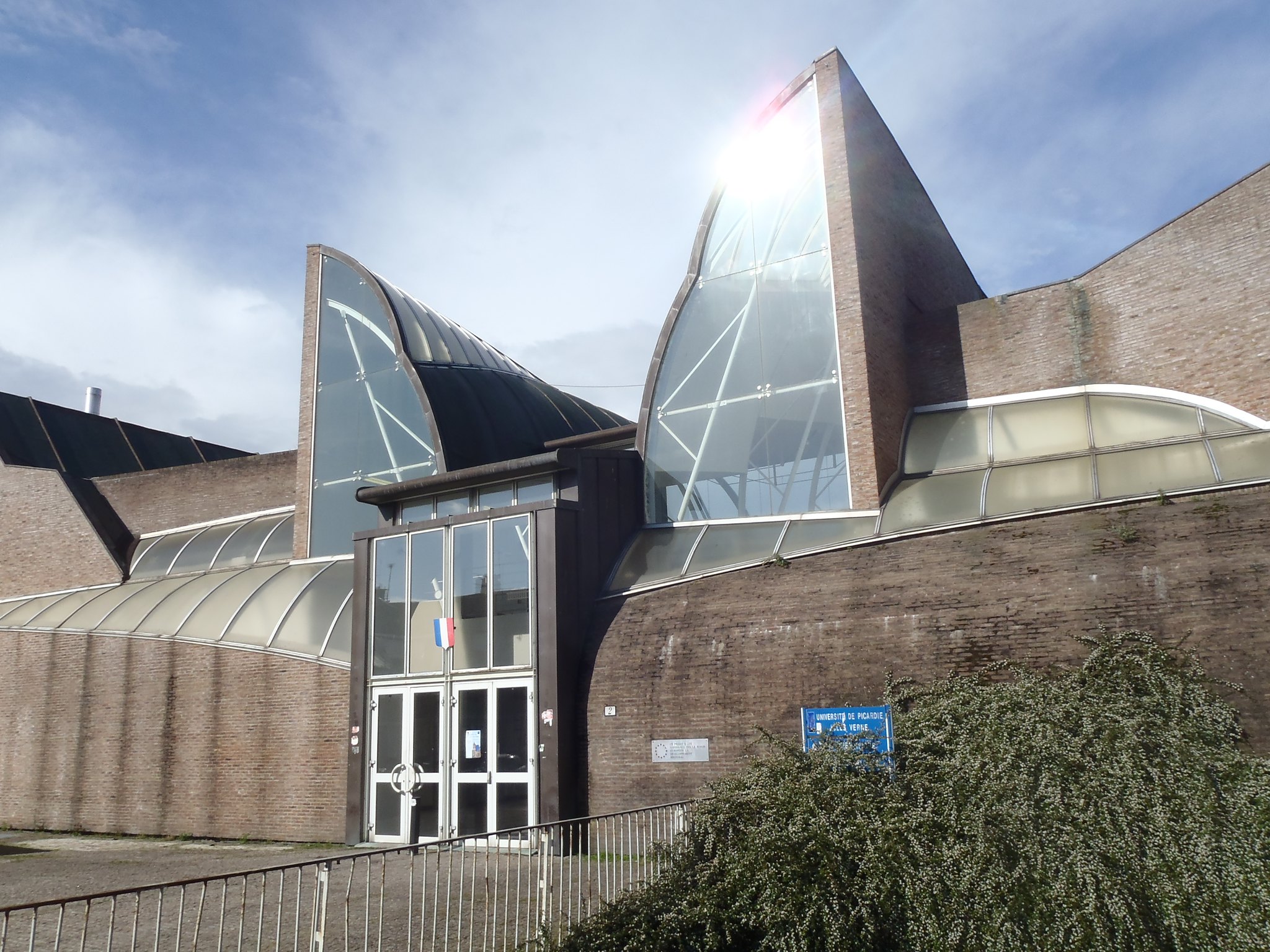
Thinking about Frank Gehry's buildings, and how the interiors are often disappointing, and how Toronto can now brag that it has a token Gehry.
Architecture, like many living things, is an attempt to defy gravity for a while In fact Wright made the analogy with trees. They manage to combine the height with better light gathering and water moving functions, along with structural wind resistance and are beautiful to look at. I think that when a building combines what we see as balance and beauty with gravity defying functions, like the Fifth Avenue Guggenheim spiral by Wright, where the ramp supports the walls and the lighting and circulation are integrated into the gaps as the ramp expands outwards, we have something new, something natural, something that has optimized the act of creation economically like nature does.
However, when we have a steel structure that supports curved metal sheets that combine into a graceful envelope, we have a sculpture, a chimera, but we certainly don't have what I would consider good architecture. None of the formal intentions are integrated with the human functions or with the structural functions. The awkward interiors are a symptom, a flaw in what should be integral.

Beaux-arts buildings and previous baroque buildings use symmetry to create visual and circulation axes within the constraints of construction techniques of the time - stone bearing capacities, structural span possibilities and light and ventilation requirements. For example width was determined by how far light could penetrate from a window to the interior, usually about twenty feet, therefore determining the maximum width of a wing to be approximately forty feet. Within these constraints, the geometry of the building emerged, and we have the Brandenburg gate, Versailles, Chenonceau, and when windows were made higher and larger through the use of flying buttresses there were the great Gothic cathedrals. Other great architectural inventions like domes served multiple functions. These rotated arches let light in from above, allowed huge spans and could be gracefully buttressed by secondary partial domes. The majesty of the byzantine temples of Istanbul remains unsurpassed.

And so why do we glorify sculptural architecture? Because it reflects our culture well. It shows that we can use technology to make things work. Mechanical and electrical systems make these buildings livable. They are large sets, that show wealth and excess. They are celebrity reasons.

As architecture it offends me, seems a bit crass due to the lack of constraint and of restraint. Pretty, sculptural, like the huge ornaments that dot history, like the colossus of Rhodes, the Atomium at Brussels, the large Roman and Roman-inspired triumphant arches. Architecture should be more than sculpture, it must work and live, make shade, shelter while being poetic. It should reflect ingenuity and evolution, and embody discoveries and inventions, discoveries like those inherent in the slight curve of the Parthenon's base and its subtly varying column spacings, the asymmetry of Chartres towers telling the story of its construction and of its builders, the lightness of its interiors, and the balance and poetics of Fallingwater's terraces and its colours and materials that rise with the light.