A ledger for insights
"Do no harm." - Hippocrates
"Be kind whenever possible. It is always possible." - the Dalai Lama
Showing posts with label beauty. Show all posts
Showing posts with label beauty. Show all posts
Saturday, January 5, 2013


Wednesday, November 7, 2012
Architecture is predicting the future
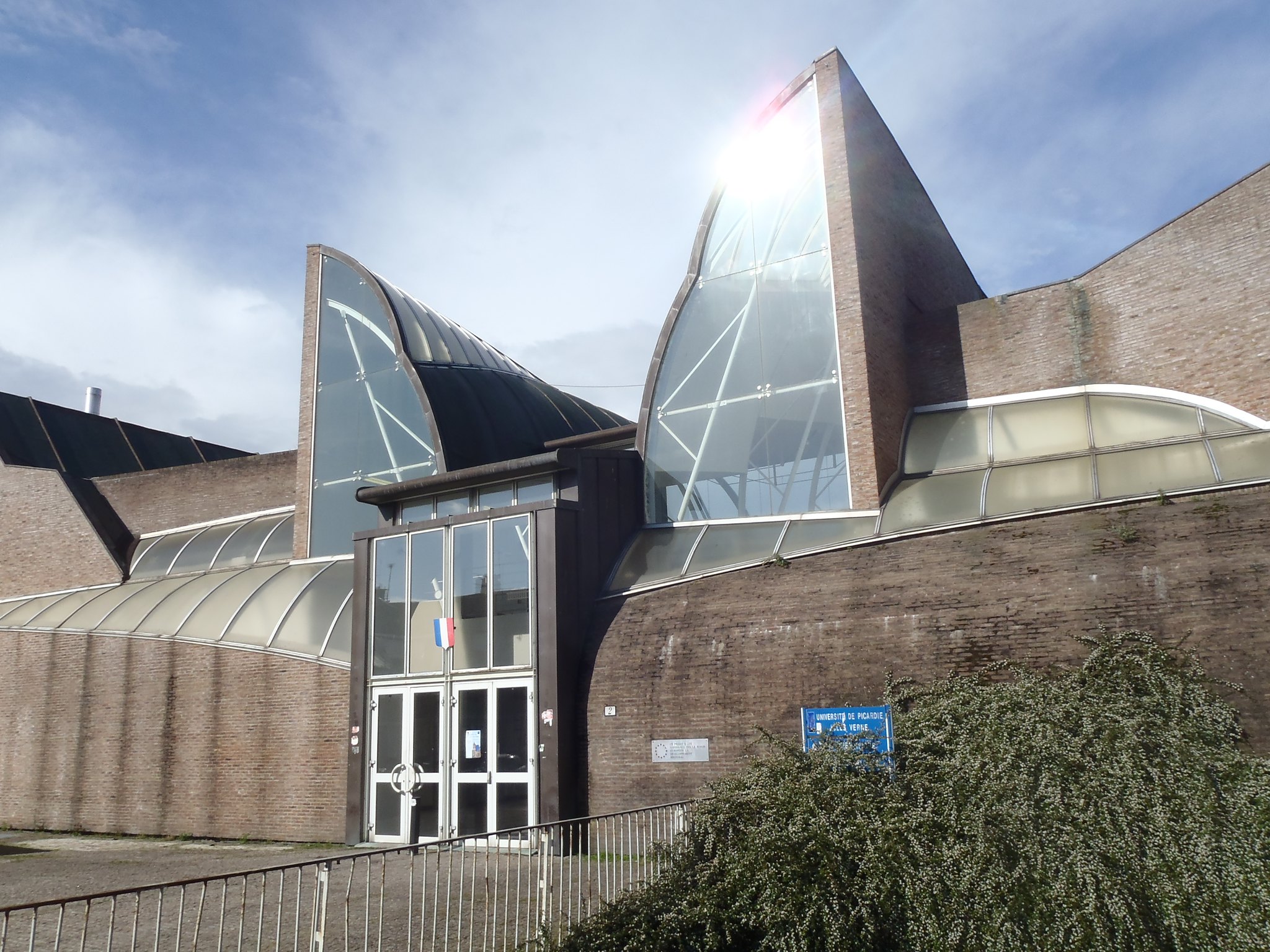
When an architect is asked to design something, part of the challenge is to anticipate the effect that this usually large built and immovable object will have on the many people that will see, use and possibly inhabit it.
Conceptual art approaches can help, for example making a building evoke an idea, or using an idea to start a design, but they are never enough. That my building is 1776 feet high may help get sponsorship, but in it will hardly be perceived.
Fame or notoriety help. Celebrity architects draw buzz and crowds. One can invest genius in a built object and the aura of the famous designer creates a culture around the space.
The inescapable challenge of architecture however is to be present in time and space in a significant way.
Here is an example of how things can go wrong:
In my little town, the well-meaning heritage preservation committee got involved in the review of a design for a pump house that would sit along the waterfront. The building would need to have the volume of a large two storey house.
The committee looked around "for context" and found a nearby older shed that had two stone gable ends and a very symmetrical sloped roof, a kind of 19th century shed. So they strongly suggested that the utility's architect (or most likely engineer), take the cue.
The intention was to reflect the heritage of the industrial waterfront area.
The result was a large, white stucco covered imitation of an old shed, like an over sized paper model of it, sitting there contrasting against the dark water and sky.
I don't think that was the intention. I also think that any architect would have easily anticipated this and informed the client of the danger. Unfortunately, the heritage preservation committee is wedded to form and mimesis (a pompous architect term meaning copycatting). Unfortunately, it is an easy notion to sell, a concept that seems to make sense, reflect shapes, and if you are lucky materials.
An aside:
I agree with many of my colleagues who say that if you are going to do some restoration work or add to an older building, choose one: re-use material or re-use form and proportion, but don't do both, at the risk of getting some half-assed mimesis.
Ok, so back to the story. This thing now sits on the waterfront, annoying, out of place, and a reminder of industrial sheds we lost, but bigger and worse.
So instead of learning a lesson, this heritage committee moves on, job well done, and is now addressing the problem of our train station. Again, mimesis is being suggested, but this time there is no proximate context, so they looked in the pattern books for old train stations with huge eaves, and came up with some hybrid Frank Lloyd Wrightish stone bunker, because they wanted the stone of course.
What is galling is that the railway people had proposed a very nice, airy design, with proper functional overhangs to protect people on the platform, but with nice glass, and curves and a good light feel to it, considering the barren context of the area, a jewel that may have lightened the oppression of the district.
I don't think it will be realized, because no-one thinks that architects can predict the future, especially when the heritage preservation committee is locked in the past.
Friday, October 26, 2012
Gender relations
 |
| Franz Erhard Walther, 1983 - Paris, Centre Pompidou - by A. Barake |
Still digesting the readings from Thanksgiving...
I read Simone de Beauvoir's "The Second Sex" recently, and as I was driving in this morning, it hit me how such a study can be a good reflection on the state of gender relations at a point in time yet how it is just that, a touch point since these relations are so varied, so much in flux, constantly evolving and I asked myself if her study was of any use in day-to-day life.
The sample size being dealt with is huge- 3 billion give or take a few million on each side of the equation, and this results in a large variety of sexual behaviours, variability and variety. The middle of the bell curve is very broad, even if we limit it to Western culture, as she does.
Yes, we are a laboratory for sex, as we should be. Until we get totally artificial about it, survival and renewal require this experimentation. Since our brains are so adaptable, interest in sex requires huge variety I guess. There is no end to the variations, and the minor things are as exciting as the major ones, however you define the categories. Marketing and advertising depend on this instinct as their currency of the new.
Despite the difficulty of categorizing such a complex topic, De Beauvoir's expose covers and uncovers much ground. Her method is to work at the delta she perceives between gender status, behaviour and emotion in every context of her time, and historically where she can.
One observation which struck me was the notion that a large number of women she observed define themselves through a male spouse or mate, as a means to gain territory, because of the cultural power disparity that existed. Desire and power, the old story, examined with great perspicacity and dissected and countered with new approaches. The central thesis of the book.
I extrapolated this notion to the study of relations between gay men and hetero women - to try to answer the question of why there can be friendly attraction without sexual attraction. Also, to test whether there was a converse with lesbians and hetero men. There isn't in a general sense. De Beauvoir has a chapter on lesbianism, and she concludes that the relation between heterosexual and same-sex desire is much closer and symmetrical in women than in men.
Having also read what Camille Paglia says about homosexuality, I am not sure that one can conclude anything like that. The spectrum is very broad as I wrote earlier, and maybe de Beauvoir's snapshot is just a reflection of what she could see, or what was visible when she wrote the book at mid-century.
Gender relations and sex remain very difficult things to generalize about, and I think it goes back to the idea that we are attracted to the new, to variety, and that behaviours that test and taste that variety are usually good for evolution, for survival, so long as they are not culturally or biologically damaging.
As the culture and the population widen, the behaviours that can be experimented with can grow, there are wider safety margins, and there is also motivation and opportunity. The taboos and secrecy around sex that act as cultural anchors to maintain tribal cohesion loosen as the tribe expands to include the planet's population. The need for protectionism disappears, reflecting the monetary and commercial globalization.
This may be why there is a resurgence of fundamentalist thought, a backlash, a clinging to what can be perceived as a moral high-ground, based on limited communications, limited population size, limited cultural migration. Pockets of resistance.
Oh yes, the book was banned by the Vatican. Go figure.
Sunday, December 14, 2008
About architecture and design optimization

However, when we have a steel structure that supports curved metal sheets that combine into a graceful envelope, we have a sculpture, a chimera, but we certainly don't have what I would consider good architecture. None of the formal intentions are integrated with the human functions or with the structural functions. The awkward interiors are a symptom, a flaw in what should be integral.
Beaux-arts buildings and previous baroque buildings use symmetry to create visual and circulation axes within the constraints of construction techniques of the time - stone bearing capacities, structural span possibilities and light and ventilation requirements. For example width was determined by how far light could penetrate from a window to the interior, usually about twenty feet, therefore determining the maximum width of a wing to be approximately forty feet. Within these constraints, the geometry of the building emerged, and we have the Brandenburg gate, Versailles, Chenonceau, and when windows were made higher and larger through the use of flying buttresses there were the great Gothic cathedrals. Other great architectural inventions like domes served multiple functions. These rotated arches let light in from above, allowed huge spans and could be gracefully buttressed by secondary partial domes. The majesty of the byzantine temples of Istanbul remains unsurpassed.
And so why do we glorify sculptural architecture? Because it reflects our culture well. It shows that we can use technology to make things work. Mechanical and electrical systems make these buildings livable. They are large sets, that show wealth and excess. They are celebrity reasons.
As architecture it offends me, seems a bit crass due to the lack of constraint and of restraint. Pretty, sculptural, like the huge ornaments that dot history, like the colossus of Rhodes, the Atomium at Brussels, the large Roman and Roman-inspired triumphant arches. Architecture should be more than sculpture, it must work and live, make shade, shelter while being poetic. It should reflect ingenuity and evolution, and embody discoveries and inventions, discoveries like those inherent in the slight curve of the Parthenon's base and its subtly varying column spacings, the asymmetry of Chartres towers telling the story of its construction and of its builders, the lightness of its interiors, and the balance and poetics of Fallingwater's terraces and its colours and materials that rise with the light.
Beaux-arts buildings and previous baroque buildings use symmetry to create visual and circulation axes within the constraints of construction techniques of the time - stone bearing capacities, structural span possibilities and light and ventilation requirements. For example width was determined by how far light could penetrate from a window to the interior, usually about twenty feet, therefore determining the maximum width of a wing to be approximately forty feet. Within these constraints, the geometry of the building emerged, and we have the Brandenburg gate, Versailles, Chenonceau, and when windows were made higher and larger through the use of flying buttresses there were the great Gothic cathedrals. Other great architectural inventions like domes served multiple functions. These rotated arches let light in from above, allowed huge spans and could be gracefully buttressed by secondary partial domes. The majesty of the byzantine temples of Istanbul remains unsurpassed.
And so why do we glorify sculptural architecture? Because it reflects our culture well. It shows that we can use technology to make things work. Mechanical and electrical systems make these buildings livable. They are large sets, that show wealth and excess. They are celebrity reasons.
As architecture it offends me, seems a bit crass due to the lack of constraint and of restraint. Pretty, sculptural, like the huge ornaments that dot history, like the colossus of Rhodes, the Atomium at Brussels, the large Roman and Roman-inspired triumphant arches. Architecture should be more than sculpture, it must work and live, make shade, shelter while being poetic. It should reflect ingenuity and evolution, and embody discoveries and inventions, discoveries like those inherent in the slight curve of the Parthenon's base and its subtly varying column spacings, the asymmetry of Chartres towers telling the story of its construction and of its builders, the lightness of its interiors, and the balance and poetics of Fallingwater's terraces and its colours and materials that rise with the light.
Subscribe to:
Posts (Atom)
Architecture, like many living things, is an attempt to defy gravity for a while In fact Wright made the analogy with trees. They manage to combine the height with better light gathering and water moving functions, along with structural wind resistance and are beautiful to look at. I think that when a building combines what we see as balance and beauty with gravity defying functions, like the Fifth Avenue Guggenheim spiral by Wright, where the ramp supports the walls and the lighting and circulation are integrated into the gaps as the ramp expands outwards, we have something new, something natural, something that has optimized the act of creation economically like nature does.